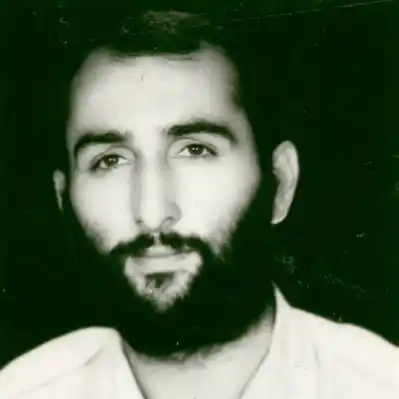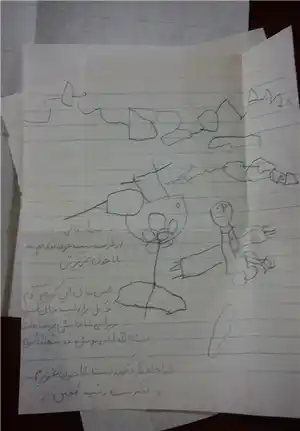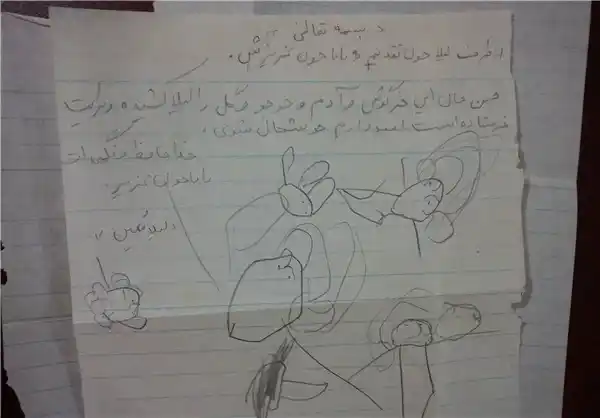
Martyr Hassan Moein was born in 1956 in the village of Lashkajan, a district of Rudsar County, into a modest and underprivileged family. He completed his early education in the same village and later in the city of Rudsar. Despite the severe economic hardship his family faced, he persevered through many difficulties and eventually obtained his high school diploma in the field of humanities. During the turbulent years of the Islamic Revolution, he was among the most prominent figures in the region, playing a significant role in organizing Hezbollah forces and mobilizing demonstrations against the tyrannical Pahlavi regime. He had a deep passion for the works of the martyred scholar Ayatollah Morteza Motahhari, to the extent that he had mastered most of his writings. After the victory of the Islamic Revolution, Martyr Moein taught philosophy and Islamic worldview in the high schools of Rudsar.
His ideological, political, and social insight was such that many of his friends and fellow fighters regarded him as a role model. Martyr Moein was a spiritually refined man, a devoted Muslim, and a firm believer in the guardianship of the Islamic jurist (Wilayat al‑Faqih). Even at the time of his martyrdom, he never abandoned his revolutionary stance against deviant and eclectic movements. He was the second martyr of his family and left behind three young children to carry on his sacred path. In 1987, after taking the national university entrance examination, Martyr Hassan Moein was admitted to the Higher Teachers’ Training College in Zahedan, where he studied Persian Language and Literature. From the very beginning of his university life, he became actively involved in various activities including religious and cultural affairs, sports, and other social initiatives, pursuing them with diligence and perseverance. He possessed a profound love for the Islamic Revolution and Imam Khomeini and consistently emphasized obedience to the Imam in his speeches.
Responding to the command of the Imam of the Ummah that going to the battlefronts was even more important than certain branches of religious duty, Martyr Hassan Moein complemented his pursuit of knowledge by joining the front lines. Along with other students, he joined the “Azam of Muhammad Rasulullah (PBUH)” units from the province of Sistan and Baluchestan and headed to the war fronts. He participated in Operation Karbala‑5 and, after relentless combat, joined the ranks of the martyrs of the Islamic Revolution on January 9, 1987, in the Karbala of Shalamcheh.
In a part of his will addressed to the Islamic nation, he wrote:
“O Muslim nation of Iran and Muslims of the world, if you seek dignity and greatness, and if you do not wish to be regretful and humiliated in the Hereafter, hold firmly to the divine rope—unity under the leadership of the Guardian Jurist—and uproot global arrogance, paving the way for the reappearance of Imam al‑Mahdi (may Allah hasten his reappearance).”